Open topic with navigation
1 Introduction
Environmental molecular diagnostics (EMDs) is a collective term that describes a group of advanced and emerging techniques used to analyze biological and chemical characteristics of soils, sediments, groundwater, and surface water. Many of these analytical techniques were originally developed for applications in medicine, defense, and industry. However, over the last decade, great advances have been made in adapting and applying EMDs for environmental site management.
Based on the results of a survey conducted as part of development of this document, and on the experience of the EMD Team, there are hundreds of examples of current application of EMDs to environmental site management projects (see Appendix B, Table B-1 and Figure ES-2). EMDs can be classified into two major categories of analytical techniques: chemical techniques, specifically compound specific isotope analysis (CSIA), and molecular biological techniques (MBTs).
Read more
CSIA measures the (typically carbon, hydrogen, or chlorine) in contaminants. This information helps to determine the extent to which specific chemical and biochemical reactions impact the contaminant. As a contaminant degrades through natural or engineered processes, the relative amount of each stable in the contaminant can change. In contrast, contaminant isotopic composition is largely unaffected by processes such as dilution that do not result in contaminant degradation. Questions pertaining to a chemical’s source, degradation mechanism, and rate of degradation can be answered through CSIA.
MBTs, also referred to as molecular biology-based EMDs, are used to determine the biochemical capabilities of microorganisms present in the environment. In many cases, particular microorganisms are responsible for the degradation of specific contaminants. Some molecular biology–based EMDs can detect and quantify known microorganisms. Other molecular biology–based EMDs can determine whether microorganisms are actively degrading specific contaminants. These EMDs can also provide identification of currently unknown microorganisms involved in these processes. Questions pertaining to biochemical capabilities and activities of microorganisms, and changes in microbial population sizes in natural and engineered environments can be answered through these types of analyses.
EMDs have applications in each phase of environmental site management, including site characterization, remediation, monitoring, and closure activities. EMDs provide additional lines of evidence for making decisions during each phase of a project. The improved decision making that results from the application of EMDs is beginning to gain acceptance throughout the environmental community.
1.1 Purpose
The purpose of this technical and regulatory guidance document is to:
- provide objective guidance on the best practices for using EMDs for environmental site management
- demonstrate appropriate uses of EMDs, including their strengths and limitations
- explain how to evaluate, apply, and interpret the results of EMDs.
Read more
EMDs are becoming increasingly powerful, and standardized methods are being developed. As a result, their use is increasing rapidly, and a growing need exists for technical information and training on EMDs. As discussed in this document, these diagnostic tools provide the following benefits:
- determine whether biotic or abiotic degradation is occurring at a site, potentially including degradation pathways and rates
- reveal whether multiple sources of contamination are present
- contribute to decision making for remediation strategies, including monitored natural attenuation
- identify when enhancements such as chemical amendments or are necessary
- aid in the advancement of monitoring program decisions
- provide complementary data to support site management decisions, including closure
This guidance and the companion internet-based training will foster the appropriate uses of EMDs and help regulators, consultants, site owners, and other stakeholders to better understand a site and to make decisions based on the results of EMD analyses.
1.2 Project Life Cycle
EMDs have applications throughout the life cycle of environmental cleanup projects. The terminology and regulatory framework for the stages of the project within its life cycle, however, often vary under different regulatory programs. For simplicity, this document organizes the discussion of site management around four main technical tasks:
- site characterization
- remediation
- monitoring
- closure
Read more
These tasks and their descriptions presented here correlate with the activities described in various regulatory programs (such as RCRA, CERCLA, State Voluntary Cleanup, and UST Site Cleanup). Although individual projects may vary in their progression through these stages, EMDs can support decision making regardless of how the project is defined. Figure 1-1 summarizes the correlations between the terms used in this guidance document and the terms used in several regulatory programs.
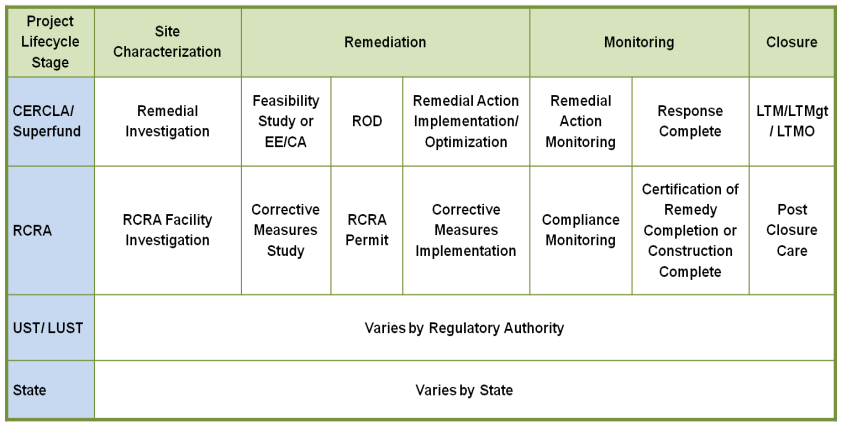
Figure 1-1. Correlation of regulatory terms.
Source: ITRC RRM IBT slide 2011.
1.2.1 Site Characterization
A typical site investigation has five main goals:
- Identify the contaminants present.
- Delineate the severity and spatial extent of contamination.
- Develop the conceptual site model.
- Provide information for the risk assessment.
- Define baseline conditions for a preliminary evaluation of potential remedies, including monitored natural attenuation (MNA).
Read more
As part of the site investigation, soil samples may be acquired and monitoring wells installed to collect groundwater samples. The samples are used to identify the contaminants present, quantify contaminant concentrations, and delineate soil impacts and the size of a dissolved contaminant plume. Field measurements (such as dissolved oxygen and pH) and laboratory geochemical analyses (such as nitrate and sulfate) may also be performed to evaluate subsurface oxidation-reduction potential and assess potential processes. Performing EMD analyses on a select subset of samples collected during site investigation aids in site characterization and preliminary assessment of potential remediation options.
1.2.2 Remediation
Remediation includes a number of significant tasks, such as:
- remedy selection
- design
- pilot testing or bench-scale testing
- sampling to develop a baseline before starting active remediation
- installing equipment (such as air sparging wells, groundwater pumps, and treatment systems)
- applying chemical amendments or reagents for strategies (such as and bioaugmentation).
Read more
The chemical, geochemical, and EMD data obtained from the site characterization will often lead to a limited number of remediation alternatives worthy of further consideration. This selection process may include bench-scale experiments, field microcosms (see passive sampling devices), or pilot studies. MNA is often considered a potential remediation alternative and may serve as a basis of comparison for evaluating enhanced remediation (that is biological, chemical, or physical) alternatives. Potential enhanced remediation technologies usually involve supplying an amendment (such as an or ) to stimulate contaminant biodegradation or a reagent (such as a chemical oxidant) to promote abiotic degradation. EMDs can be used to supplement chemical and geochemical analyses to gain better insight into the most appropriate remedy. Additionally, EMDs can be used in conjunction with chemical and geochemical analyses as part of the baseline sampling before starting active remediation. Monitoring may be conducted as part of the remediation stage and remediation may be ongoing as a project moves into a monitoring stage.
1.2.3 Monitoring
Incorporating EMDs into monitoring efforts can provide an additional line of evidence to support chemical and geochemical data.The United States Environmental Protection Agency (USEPA 2004b) defines monitoring to be
“… the collection and analysis of data (chemical, physical, and/or biological) over a sufficient period of time and frequency to determine the status and/or trend in one or more environmental parameters or characteristics. Monitoring should not produce a ‘snapshot in time’ measurement, but rather should involve repeated sampling over time in order to define the trends in the parameters of interest relative to clearly-defined management objectives. Monitoring may collect abiotic and/or biotic data using well-defined methods and/or endpoints. These data, methods, and endpoints should be directly related to the management objectives for the site in question.”
Under the USEPA definition for monitoring, six types of monitoring can be identified that are used throughout both federal and state regulatory programs.
Read more
-
Detection monitoring – parameters are measured and compared to background data, or regulatory thresholds, to determine if there is a statistical increase which would reflect that a release has occurred.
-
Compliance monitoring – parameters are monitored to determine that chemical concentrations remain below an established regulatory threshold level.
-
Characterization monitoring – parameters are monitored to determine the magnitude and migration of contamination.
-
Remediation monitoring – parameters are monitored to determine the performance and effectiveness of the remedial action. This monitoring includes monitoring after a remedy has been installed, monitoring subsequent to serial applications of amendments, and the trend and performance analyses for remedies.
-
Post-closure monitoring – parameters are monitored over the long term after a site has been remediated and closed to show that contaminant concentrations remain below regulatory threshold levels. Post-closure monitoring is typically used at sites being remediated under the Resource Conservation and Recovery Act (RCRA).
-
Post-remediation monitoring – parameters are monitored to show that remediation has truly been accomplished and that contaminant concentrations do not rebound.
1.2.4 Closure
Site closure is determined by local, state, or federal regulatory agencies based upon applicable laws, regulations, and policies. Sites ideally are closed when cleanup goals are attained and impacts to environmental media (soil, groundwater, surface water, soil vapor, and air) no longer exist in concentrations that pose a threat to human health or the environment. EMDs can serve as additional lines of evidence for site closure. Examples of closure concerns and of how EMDs are used to complement traditional data are provided in each specific EMD section.
Read more
Site cleanup goals may be based upon state or federal regulatory levels (such as state standards for surface water or federal standards, established under the Safe Drinking Water Act) or site-specific risk-based levels. Meeting these goals is commonly accomplished through remedial actions. For a site, the remedial goals may include interim remedial goals or final remedial goals. The site cleanup goals and the remedial goals for a specific site may be the same or they may be different. Typically, the basis for considering closure is through traditional chemical data, that show downward trends in contaminant concentrations are occurring and that the plume is shrinking. In these cases, an evaluation of whether degradation will continue to occur using EMD data may be a line of evidence that assures that the residual concentrations will not pose a threat to human health or the environment following site closure.
In some programs or states, sites may be closed based upon a low-risk scenario. A low-risk scenario is where site-specific data or models show that concentrations of contaminants that are proposed to be left at a site (although above established state or federal regulatory levels) do not pose a threat to human health or the environment (either based on an assessment of the current and future risks or the absence now or in the foreseeable future of receptors). Some concerns of the low-risk scenario are whether residual contamination will continue to degrade within a site-specific timeframe, and if so, whether contaminants will degrade to non-hazardous byproducts (in the absence of continued monitoring). To allay these concerns, additional information (over and above chemical and geochemical analyses) which could be provided by EMDs on the mechanisms of degradation (biological destruction versus physical factors like dilution or downgradient migration) also may be helpful to the closure assessment.
1.3 Individual EMD Definitions
The main sections of this document include information about CSIA and about a group of molecular biology-based EMDs. The main sections and the appendices also provide limited information about emerging technologies. For ease of use, definitions are presented for the primary methods that are discussed:
EMD Definitions and Links to Fact Sheets
-
Compound Specific Isotope Analysis (CSIA)
Analyzes the relative abundance of various stable isotopes (such as 13C:12C, 2H:1H). Degradation processes can cause shifts in the relative abundance of stable isotopes of the contaminant; changes in isotopic ratios can be measured. See the CSIA Fact Sheet for more information.
-
Quantitative Polymerase Chain Reaction (qPCR)
A laboratory analytical technique for quantification of a target based on DNA. See the qPCR Fact Sheet for more information.
-
Reverse Transcriptase qPCR (RT-qPCR)
A laboratory analytical technique for quantification of a target gene based on RNA. See the qPCR Fact Sheet for more information.
-
Phospholipid Fatty Acid () Analysis
A laboratory analytical technique that differentiates groups of microorganisms based on quantifying PLFA types. See the Microbial Fingerprinting Fact Sheet for more information.
-
Denaturing Gradient Gel Electrophoresis (DGGE)
Type of gel electrophoresis used to separate mixtures of PCR products based on the melting point which is reflective of the DNA sequence. DGGE is used to generate a genetic fingerprint of the and potentially identify dominant microorganisms. See the Microbial Fingerprinting Fact Sheet for more information.
-
Terminal restriction fragment length polymorphism (T-RFLP)
A (DNA or RNA)-based technique used to generate a genetic fingerprint of the microbial community and potentially identify dominant microorganisms. See the Microbial Fingerprinting Fact Sheet for more information.
-
Microarrays
Detects and estimates the relative abundances of hundreds to thousands of genes simultaneously. See the Microarrays Fact Sheet for more information.
-
Stable Isotope Probing (SIP)
A synthesized form of the contaminant containing a stable isotope (such as 13C label) is added. If biodegradation is occurring the isotope will be taken up by the organism and detected in (e.g., phospholipids, DNA). See the SIP Fact Sheet for more information.
-
Enzyme Activity Probes (EAPs)
Transformation of surrogate compounds (probes) resembling contaminants produces a fluorescent (or other distinct) signal in cells which is then detected using a microscope. See the EAP Fact Sheet for more information.
-
Fluorescence In Situ Hybridization (FISH)
Detects and localizes the presence of targeted genetic material in an environmental sample, which can be used to estimate the number of specific microorganisms or groups of microorganisms. See the FISH Fact Sheet for more information.
1.4 Document Organization
This guidance document takes advantage of a web-based format. Definitions of various terms are available by clicking on the word or glossary icon. Background information on isotopic chemistry and microbiology is provided in appendices if you are unfamiliar with the basic principles. These appendices can be accessed in several locations throughout the document to provide additional information as needed. Additionally, related sections, such as case studies and the associated EMD, are linked together for easy access.
Open topic with navigation